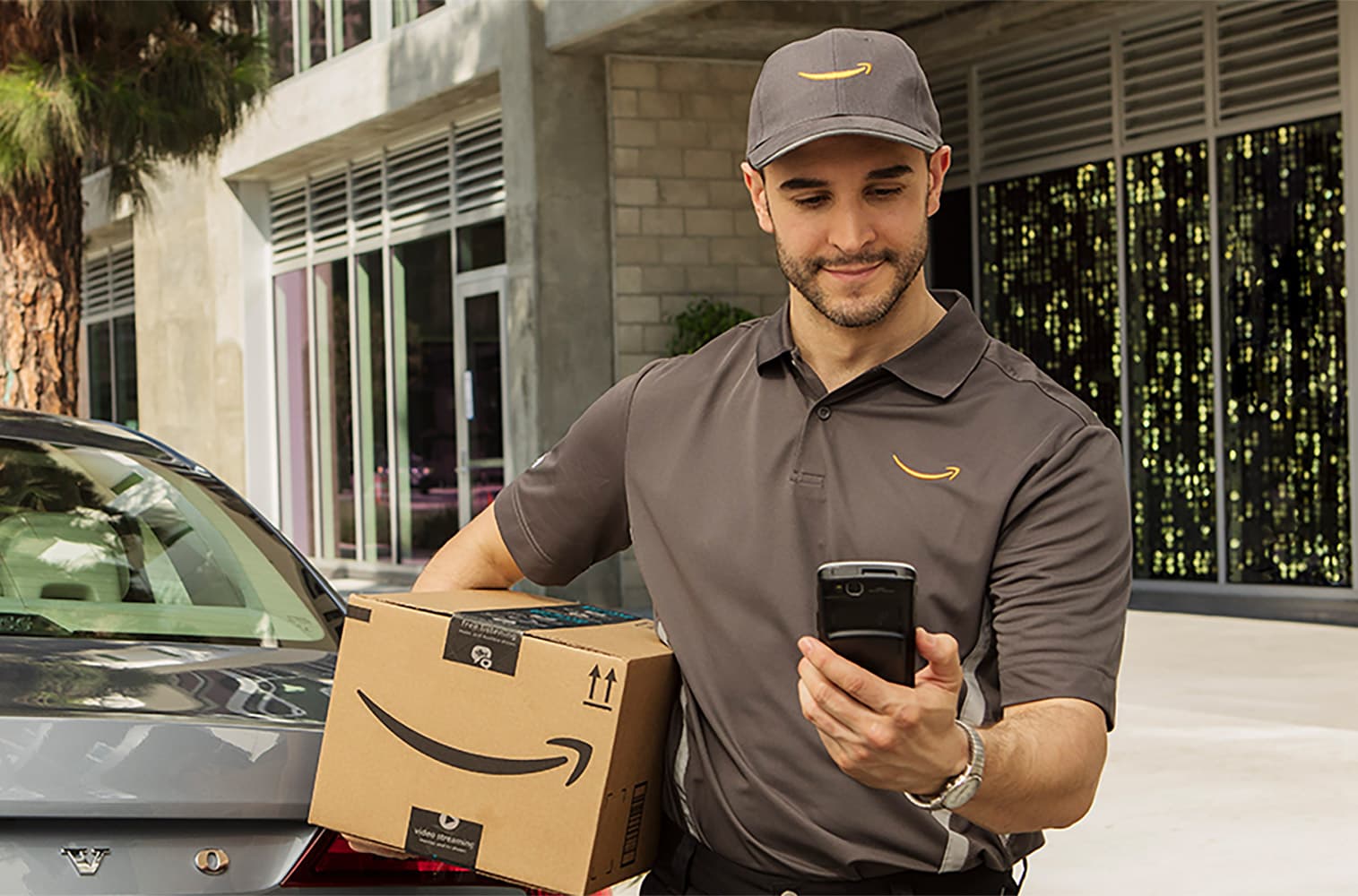
Amazon Key: In-Car Delivery
Invented and shipped in-car package delivery for a brand-new Amazon program, from zero to a live product across iOS, Android, and connected vehicles.
Overview
In-car delivery was, for me, the defining work of a long career. I helped a team of designers, product partners, and engineers invent an entirely new way to receive Amazon packages: securely, inside your own vehicle. We shipped in-home delivery in Fall 2017 and followed with in-car in Spring 2018. I served as one of two design leads, focused on the in-car experience, which meant equal parts inventing something that did not exist and crafting it to feel unmistakably Amazon.
The challenge
A day-one product has no patterns to lean on. We had to solve three hard problems at once. First, explain a genuinely new concept: early testing showed that even users who had read the program overview did not understand that their car had to be parked at the delivery location.
Second, earn trust: people consider their car a private space, and we were asking to open it. Third, work across a fragmented hardware reality: every vehicle maker implemented cloud connectivity differently, and none offered a public API, so there was no clean backend to build against.
What I did
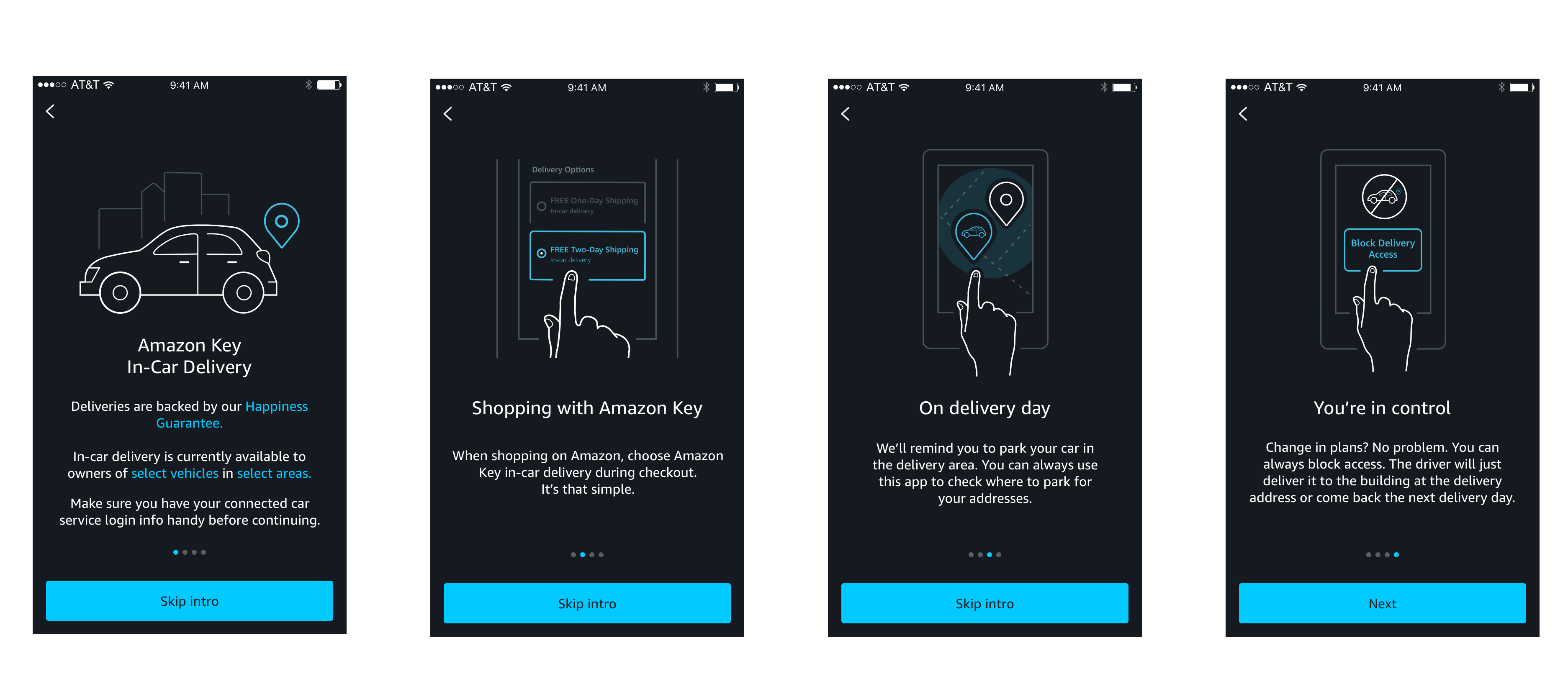
I owned the in-car setup experience end to end, and I carried the design language, patterns, and tone we had built for in-home over to the vehicle use case. To solve comprehension, I paired lightweight onboarding cards with explanatory copy on every single setup screen, because research told us plainly that some users skip the intro and still need to succeed. To build trust, I tuned the voice of every screen toward a responsible, careful brand, and designed delivery cards and notifications that reminded people exactly where to park and clearly signaled when their vehicle would be accessed. To handle the OEM fragmentation, I designed the flow around embedded webviews of each maker's sign-in, and accounted for eligibility edge cases like region and Prime status.
The process was relentlessly iterative and deeply cross-functional. We learned early to bring engineering into the room from the first sketch, because a beautiful idea that cannot be built is wasted motion. From aligned sketches we moved to high-fidelity flows, then validated the riskiest assumptions with our research lead through structured studies. Because the program was confidential, early research ran with a small internal sample, which pushed us to deliberately recruit across very different functions and levels to avoid designing for a single persona.
Outcome
In-car delivery went live in April 2018 and iterated on weekly design sprints and roughly biweekly releases. Our north-star metric was customer happiness, tracked closely through two in-app feedback channels. What began as a strange, novel idea steadily became a normal, delightful way for people to receive their packages. The bigger lesson stayed with me: when you are inventing something with no precedent, clarity and trust are not polish, they are the product.